Rush
The social app for students
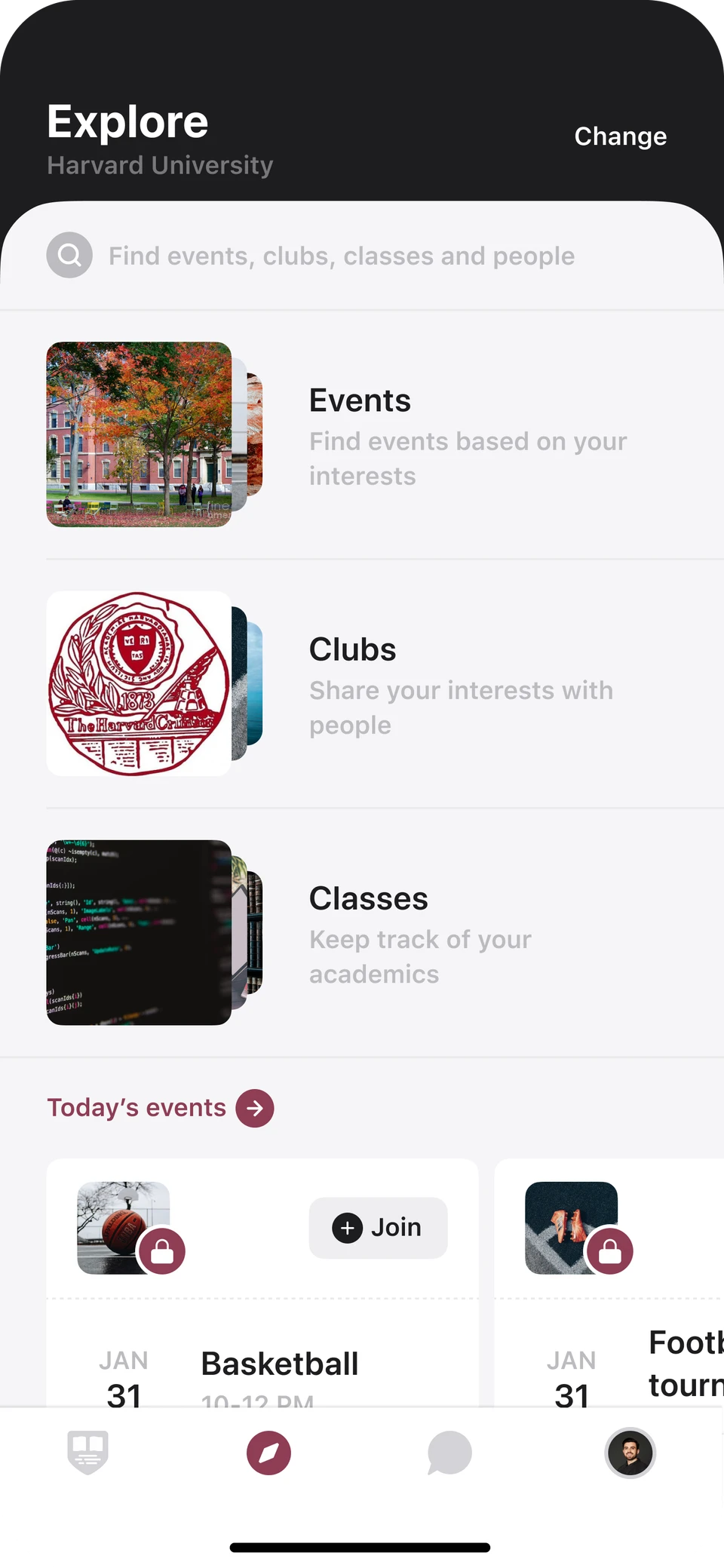
Rush was a social network built on the structure of college campuses. Students share housing, classes, clubs, and events — a dense social graph no one had modeled as a product. Rush turned that existing structure into a better way to connect people.
| Role | Founder |
|---|---|
| Timeline | 2017 — 2020 |
Rush reached 34K DAU across a dozen campuses in year one with a 52% DAU/MAU ratio. The app shut down in 2020 due to the COVID-19 pandemic.

Problem
Campus life was spread across flyers, WhatsApp, GroupMe, Instagram, Snapchat Facebook Groups, email lists, and word of mouth. Facebook started on campuses, but by 2017 it had become a general social network. No product modeled the campus itself: who is in your classes, what is happening tonight, and which groups fit your interests.
So students, especially freshmen, met people mostly by chance.
A campus already has a dense, structured social graph: shared housing, classes, clubs, and events. Capture that structure and you can design for serendipity.
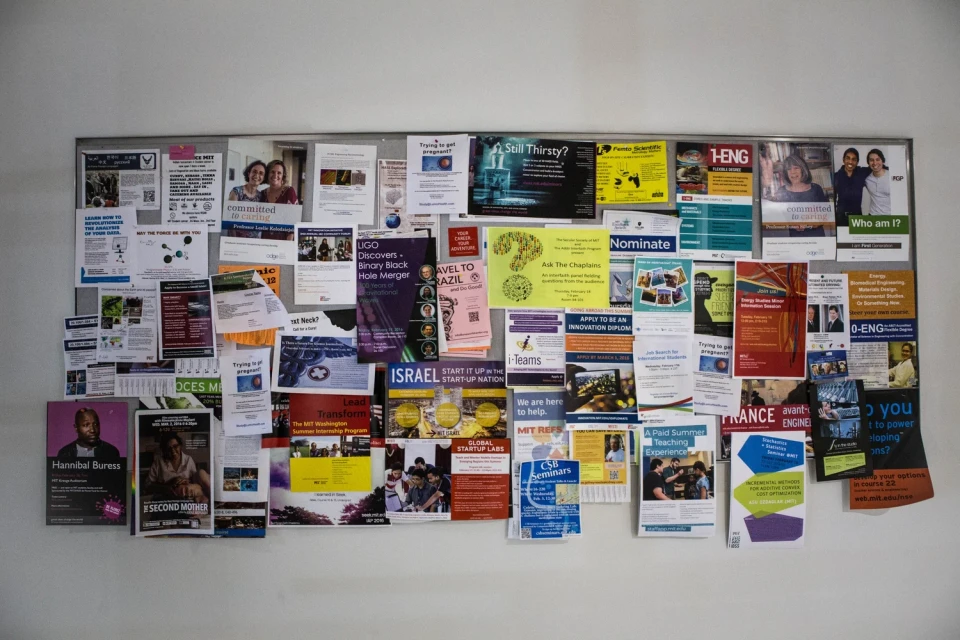
The bulletin board was the original version of this. Nearly every flyer had a QR code to a WhatsApp or GroupMe chat, which meant the same event lived in disconnected places: paper on a wall, and a thread on someone's phone. The structure was already there — a thing happening, a place, and a group forming around it. It was just scattered.
A closed network
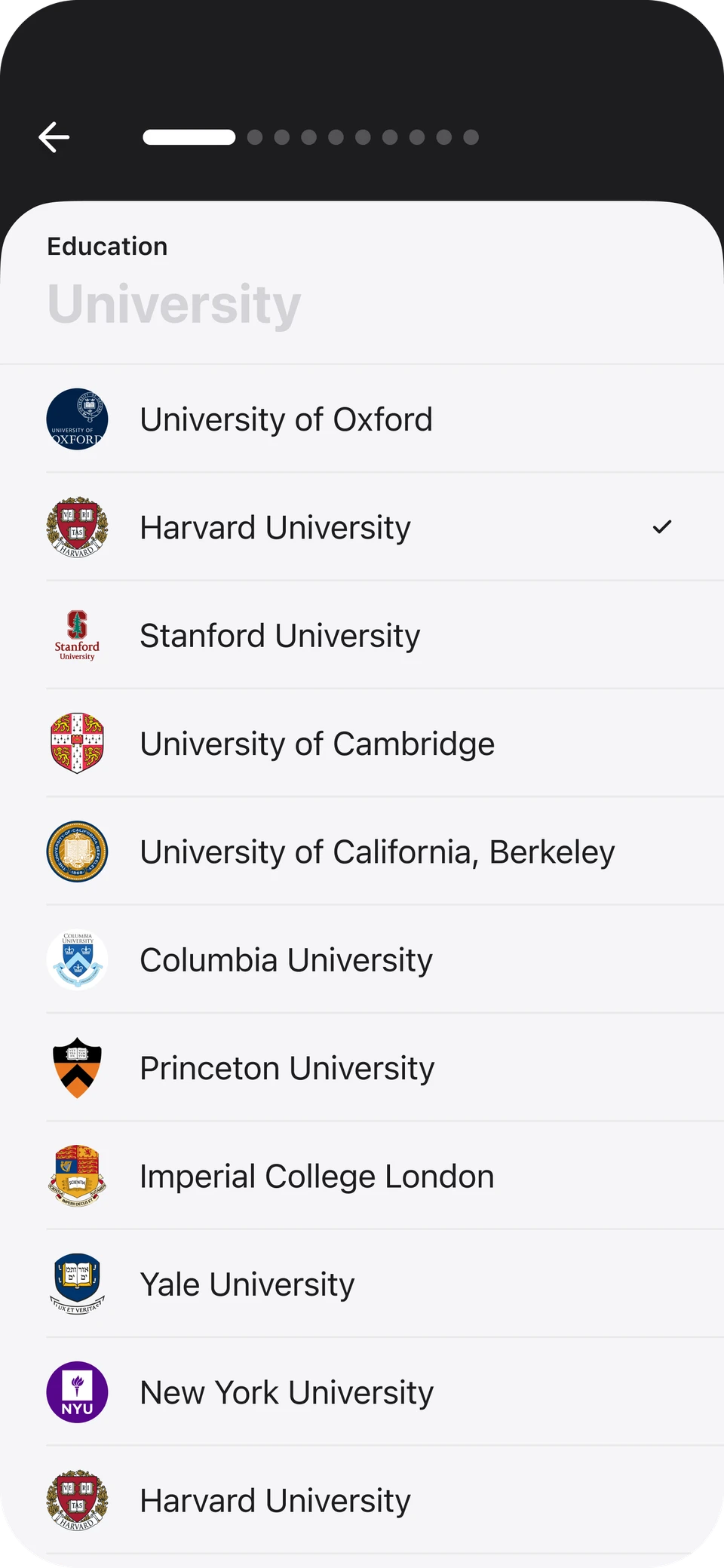
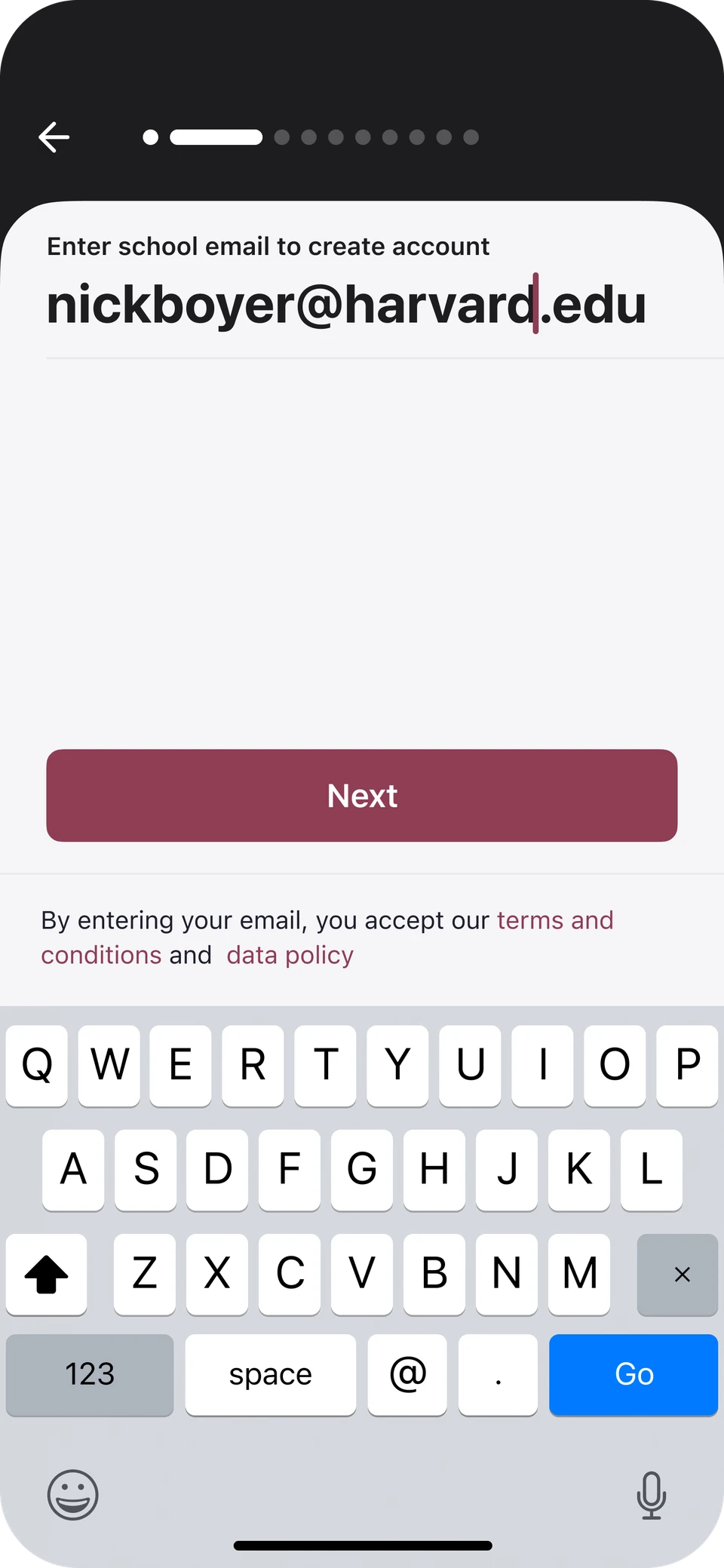
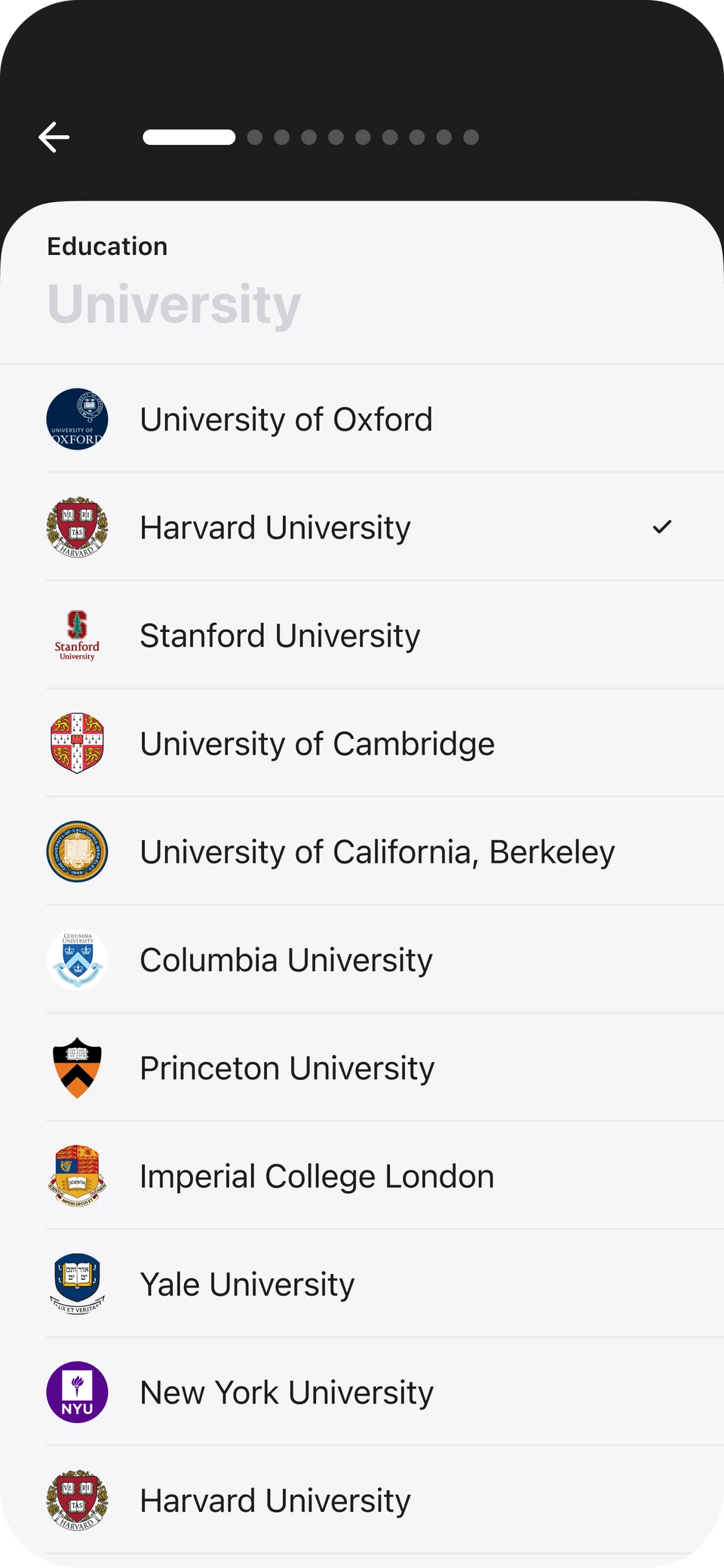
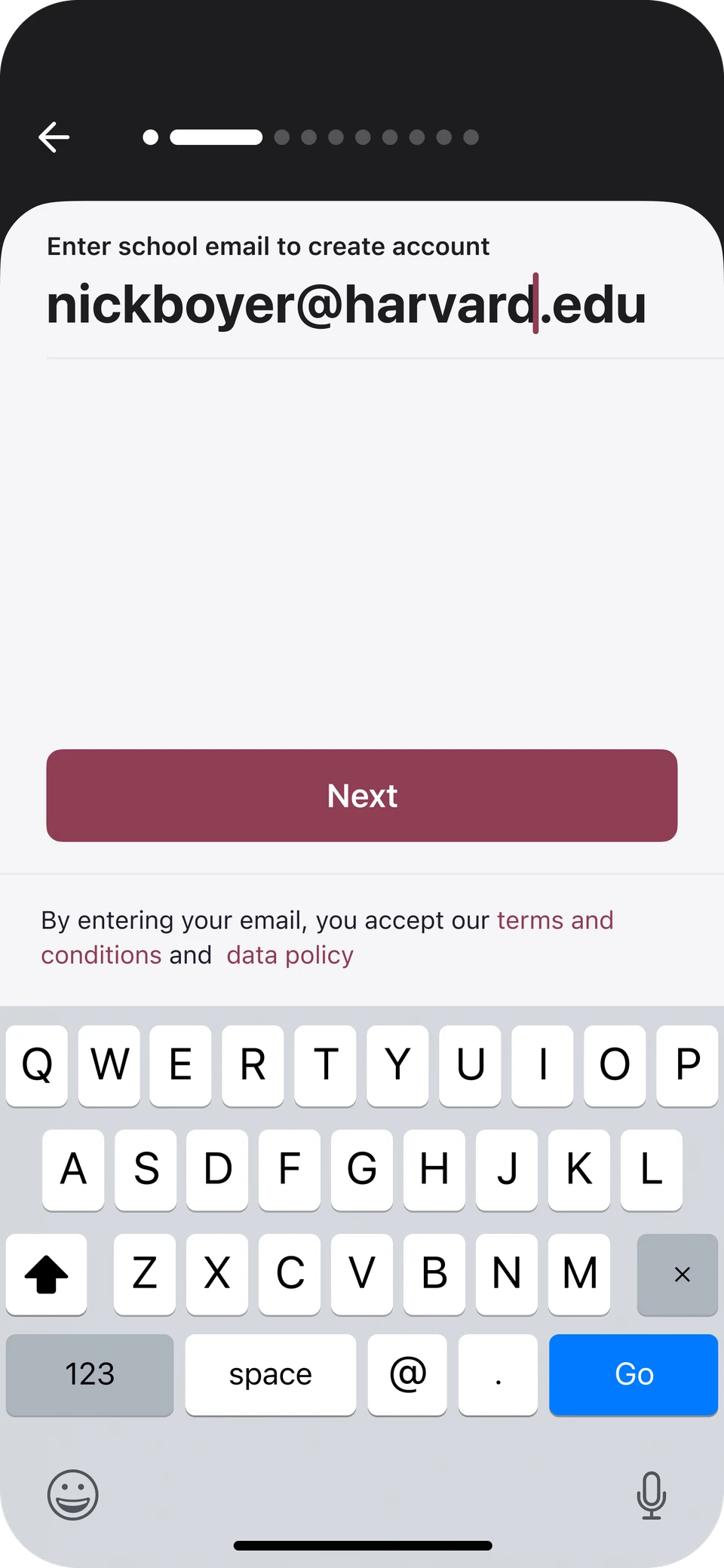
To join, students picked their campus, verified a student .edu email, and confirmed with geolocation that they were near that campus.
Why: Trust and density. Everyone on Rush was a verified student, and everyone was local, so every event in the feed was one you could actually attend.
Tradeoff: A hard ceiling on market size, and no path for alumni or non-students. This later became the main investor concern.
Classes as the seed graph
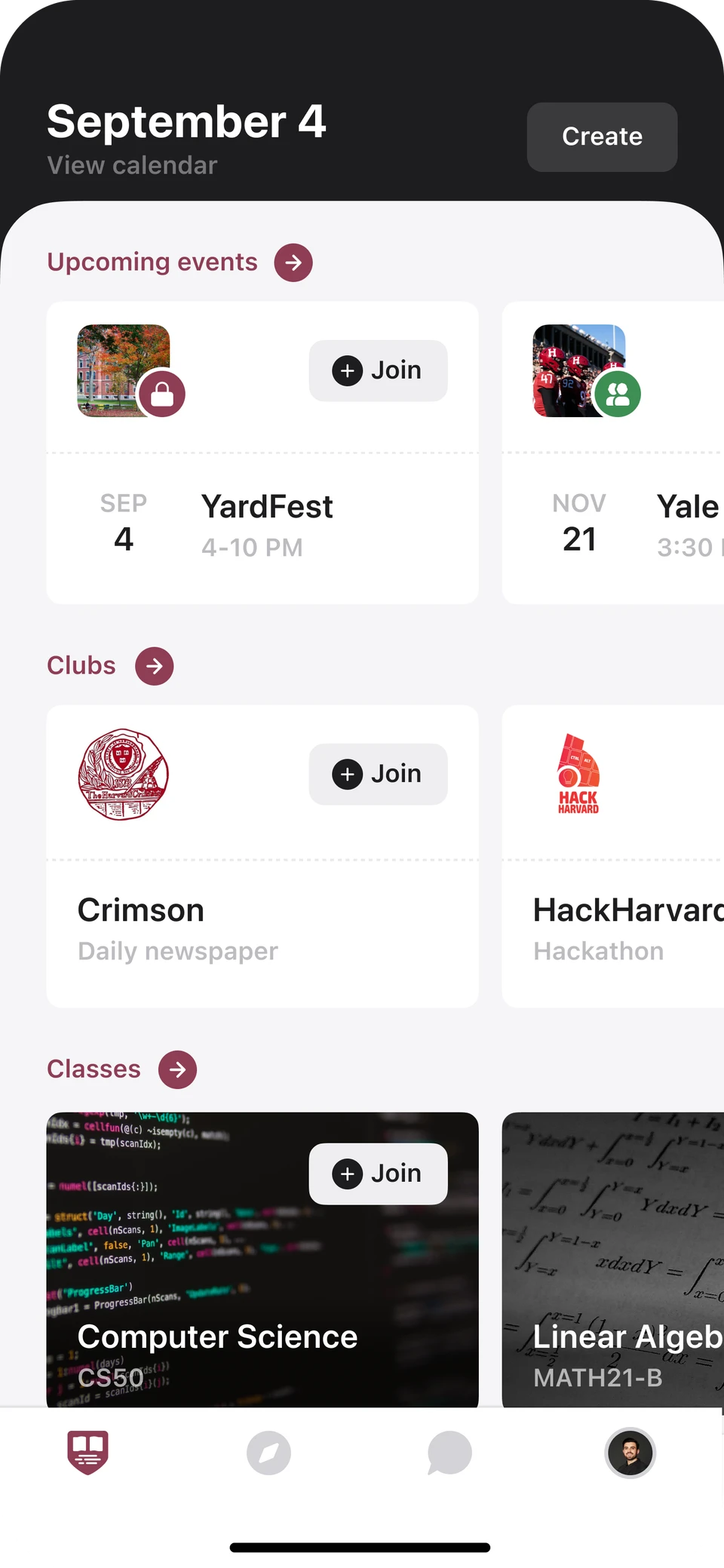
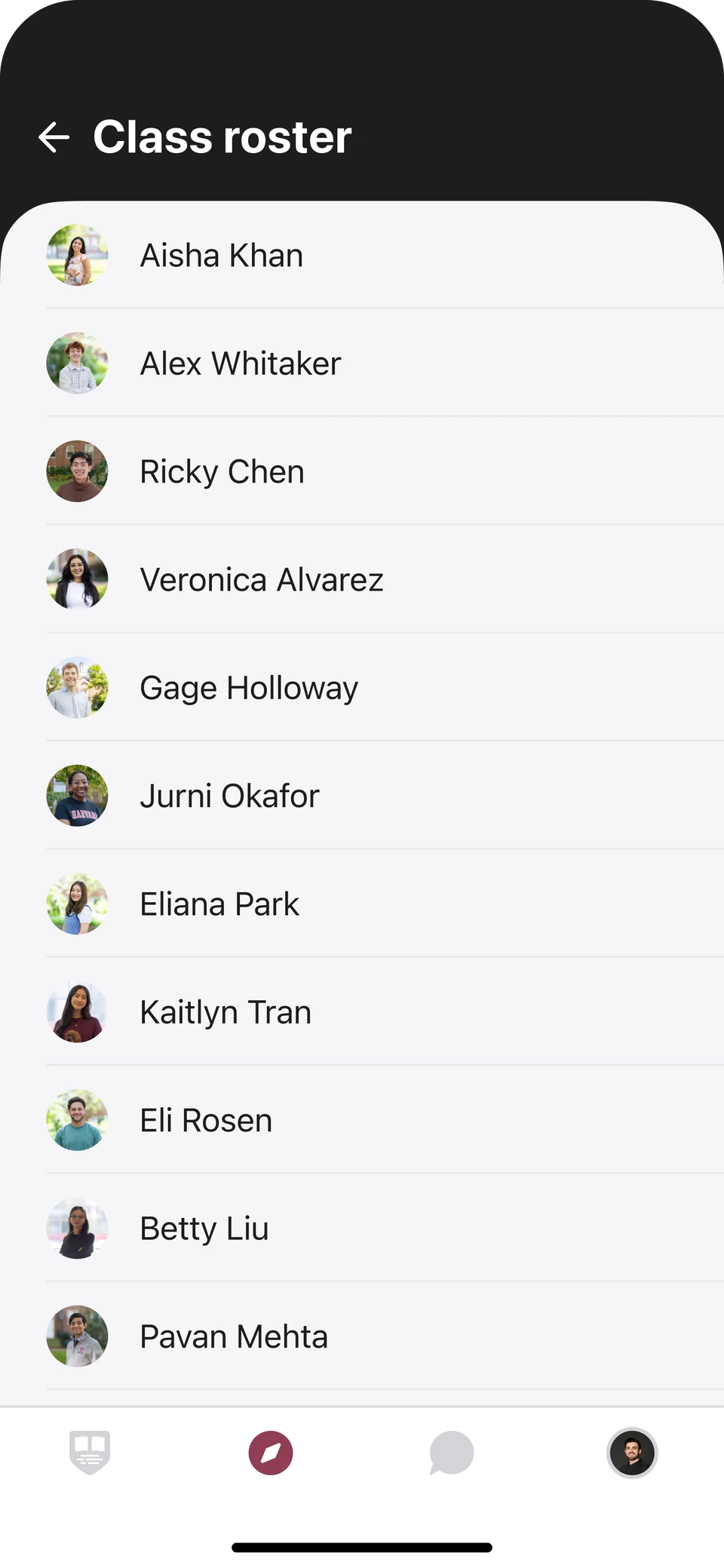
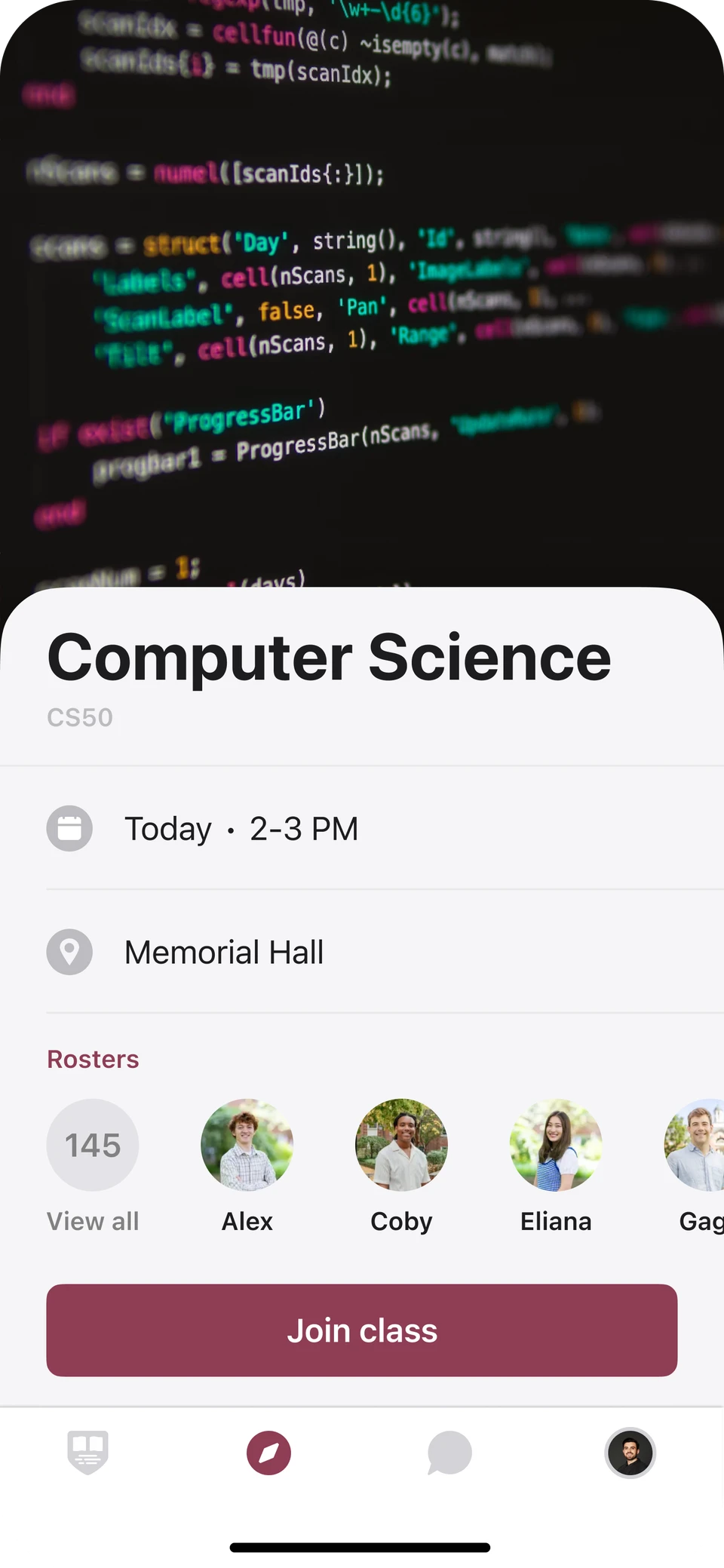
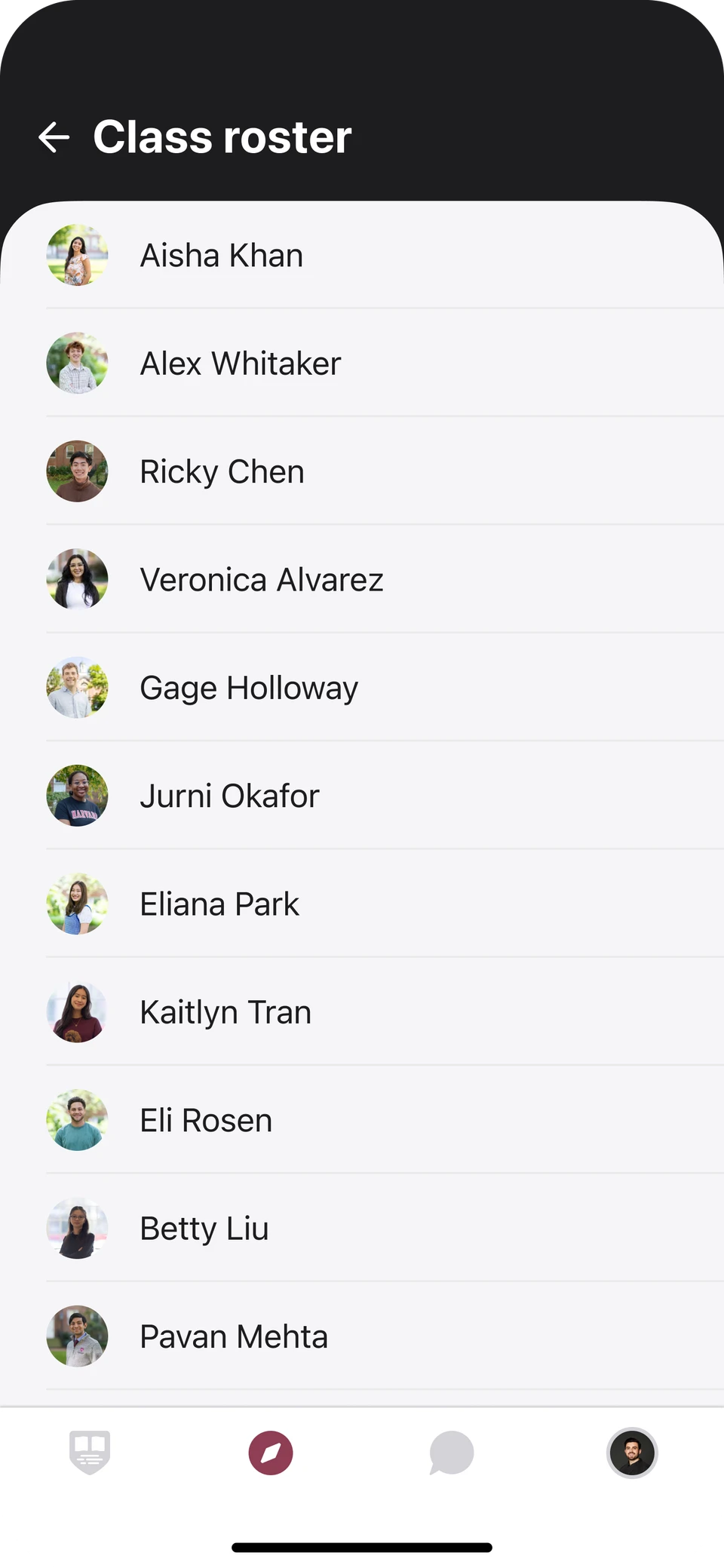
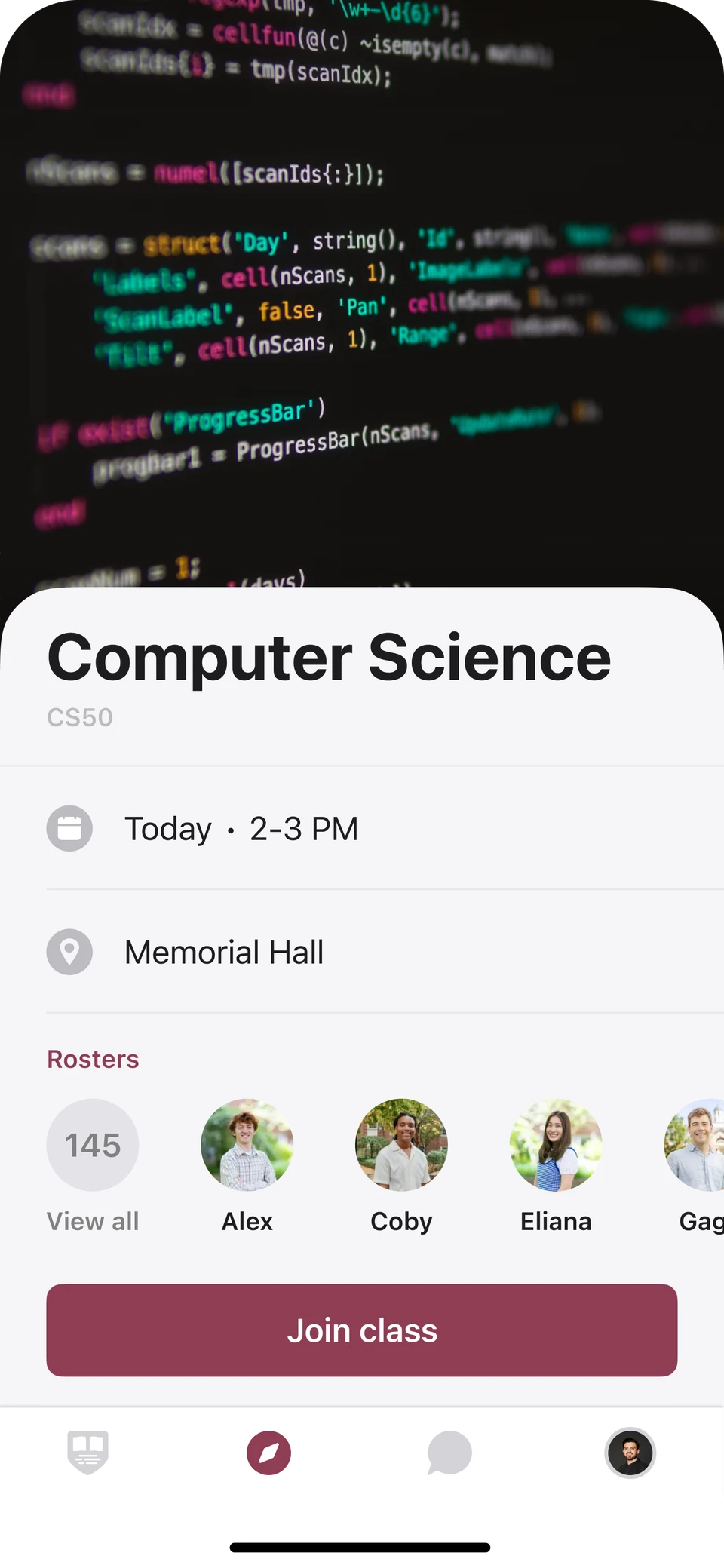
We scraped each school's course catalog, and students added their class schedule during onboarding. Each class became a group with a meeting time, a place, a roster, and a chat. Classes also appeared on the student's calendar in time order, so they could plan their day.
Why: It solved cold start. A new user saw their classmates immediately, with no friend requests needed. Class rosters became the most common way students met each other, and class chats were where they shared notes, problem sets, and opinions on professors.
Tradeoff: Scraping was custom for every school and was the largest hurdle of launching each new campus.
Every event creates a chat
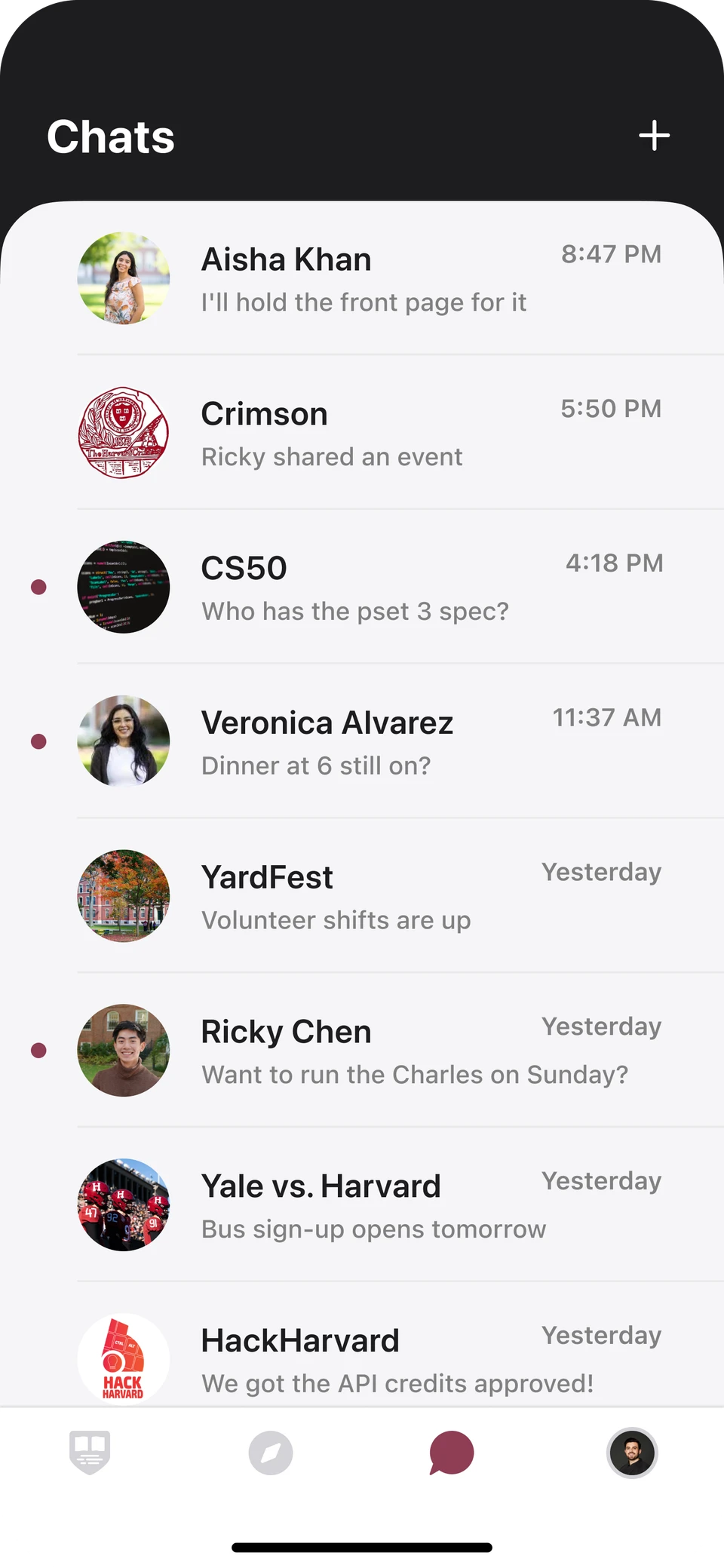
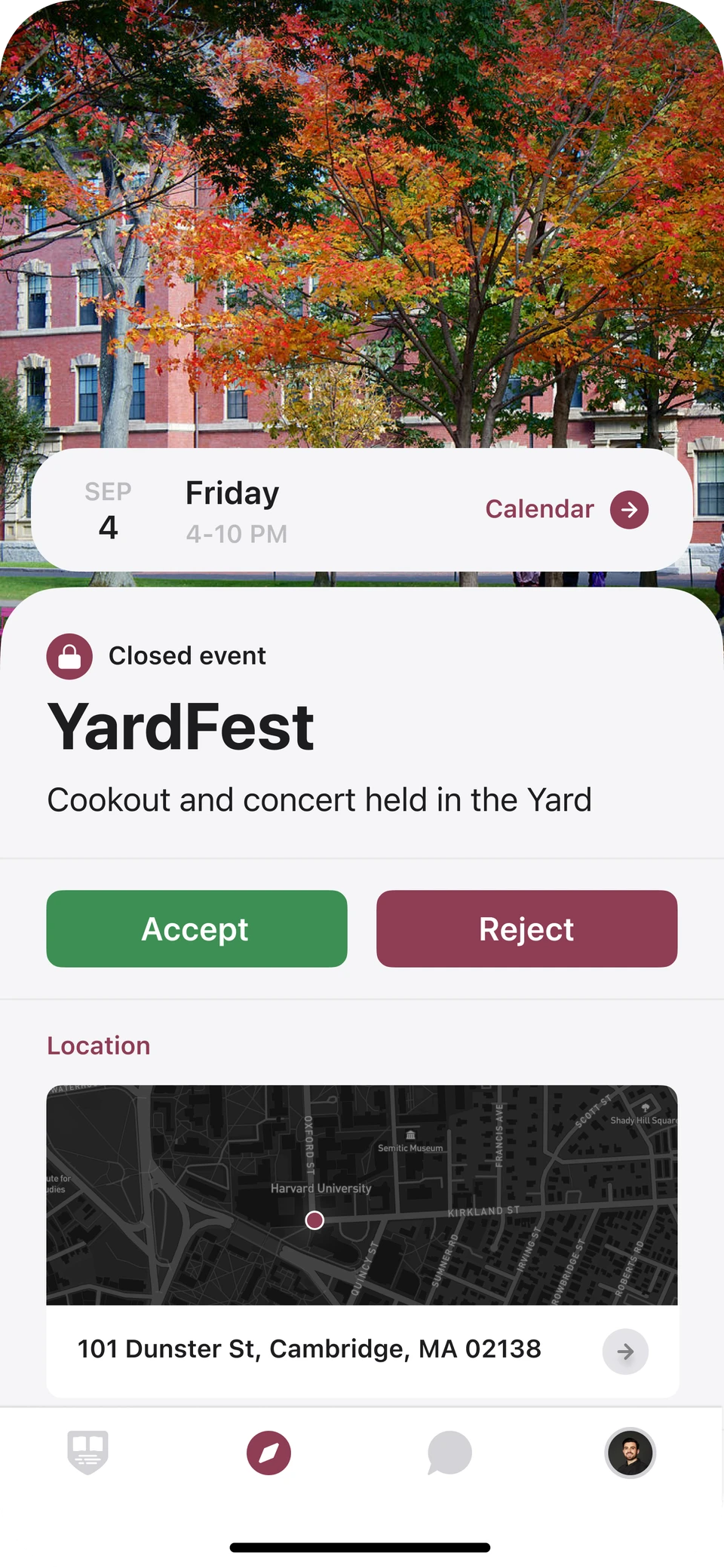
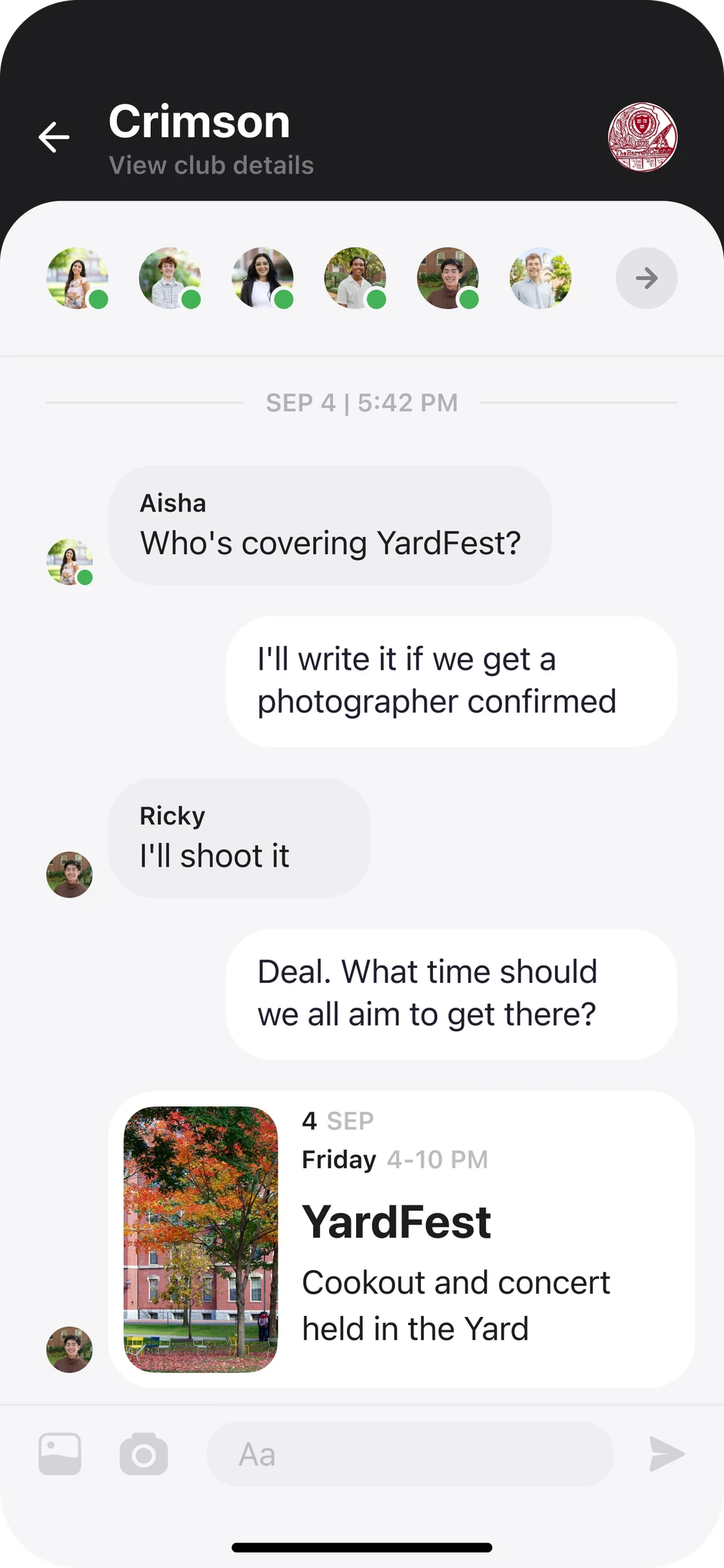
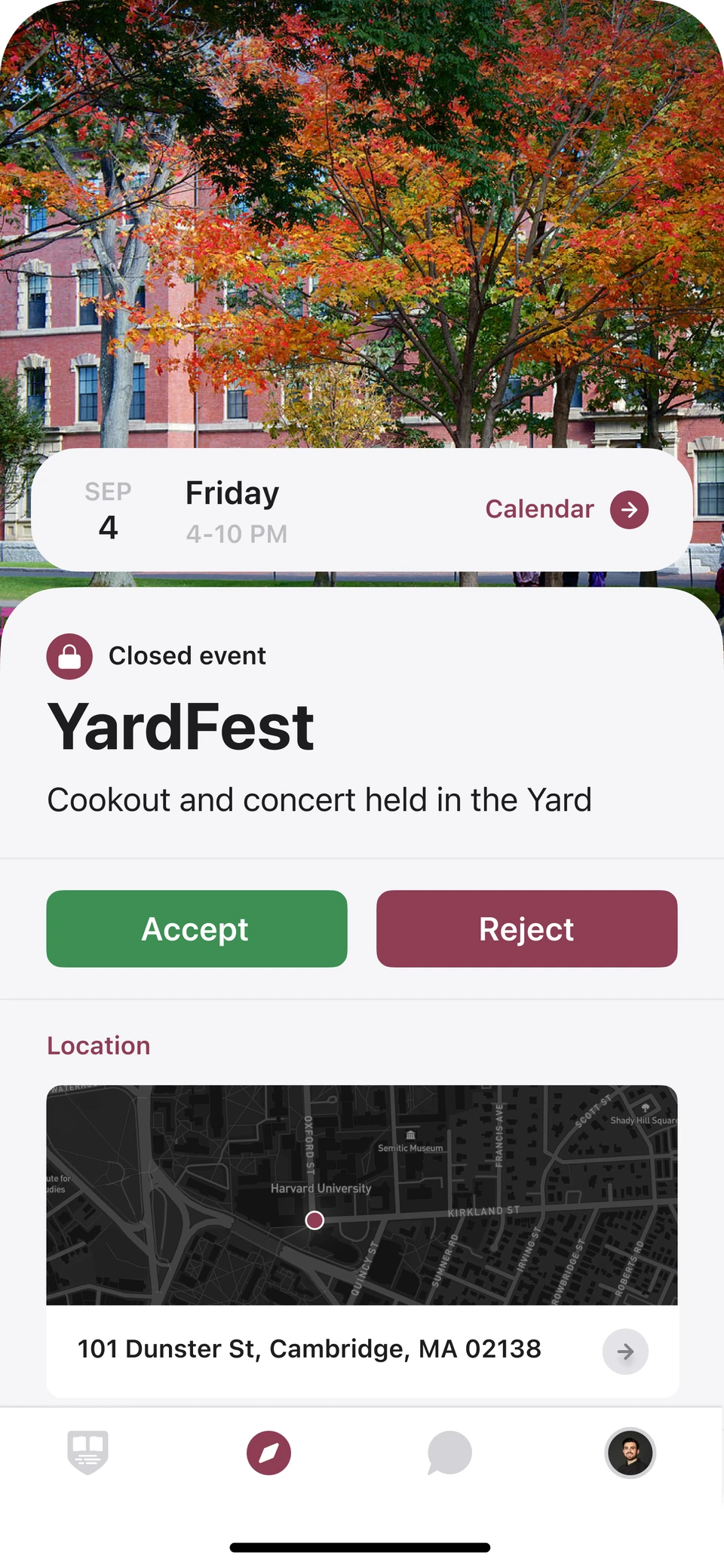
Joining an event added you to a group chat with every other attendee. Events were public, or closed and invite-only. Any event could be shared into any chat thread as a card.
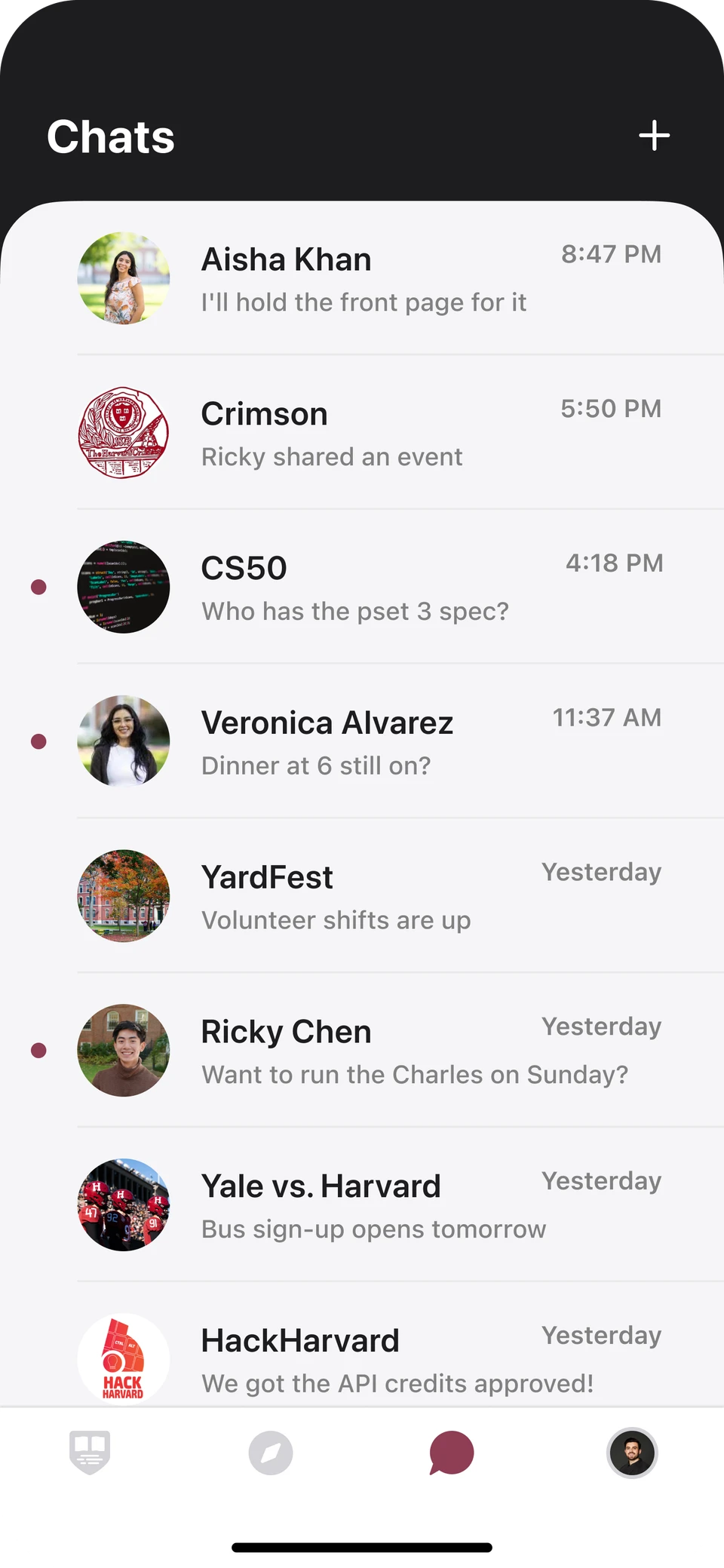
Why: An RSVP became a conversation before the event started. Shared event cards turned every chat into a distribution channel for events. Messaging became the core loop: 88% of users sent a message every week.
Tradeoff: Students in many events accumulated chats quickly, and the chat list got noisy.
One object model
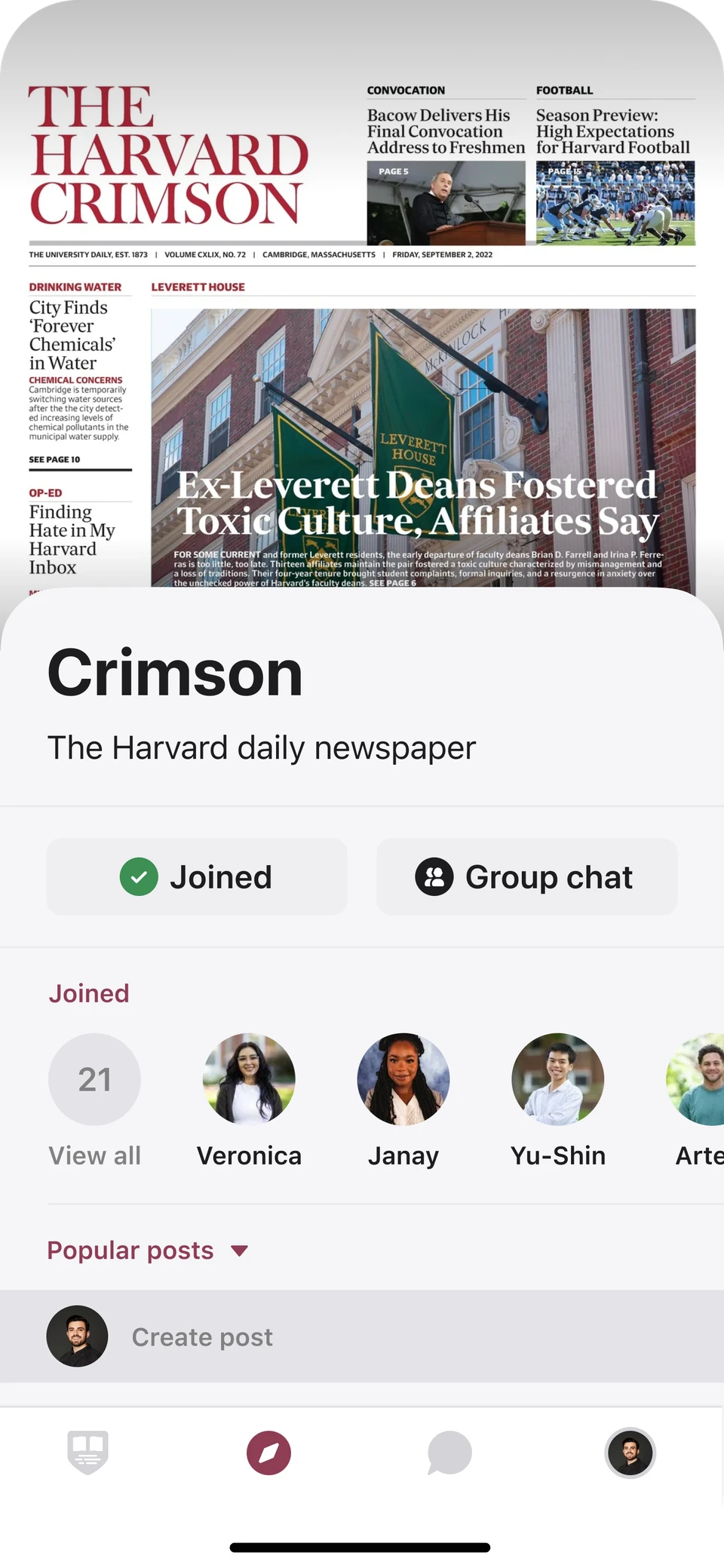
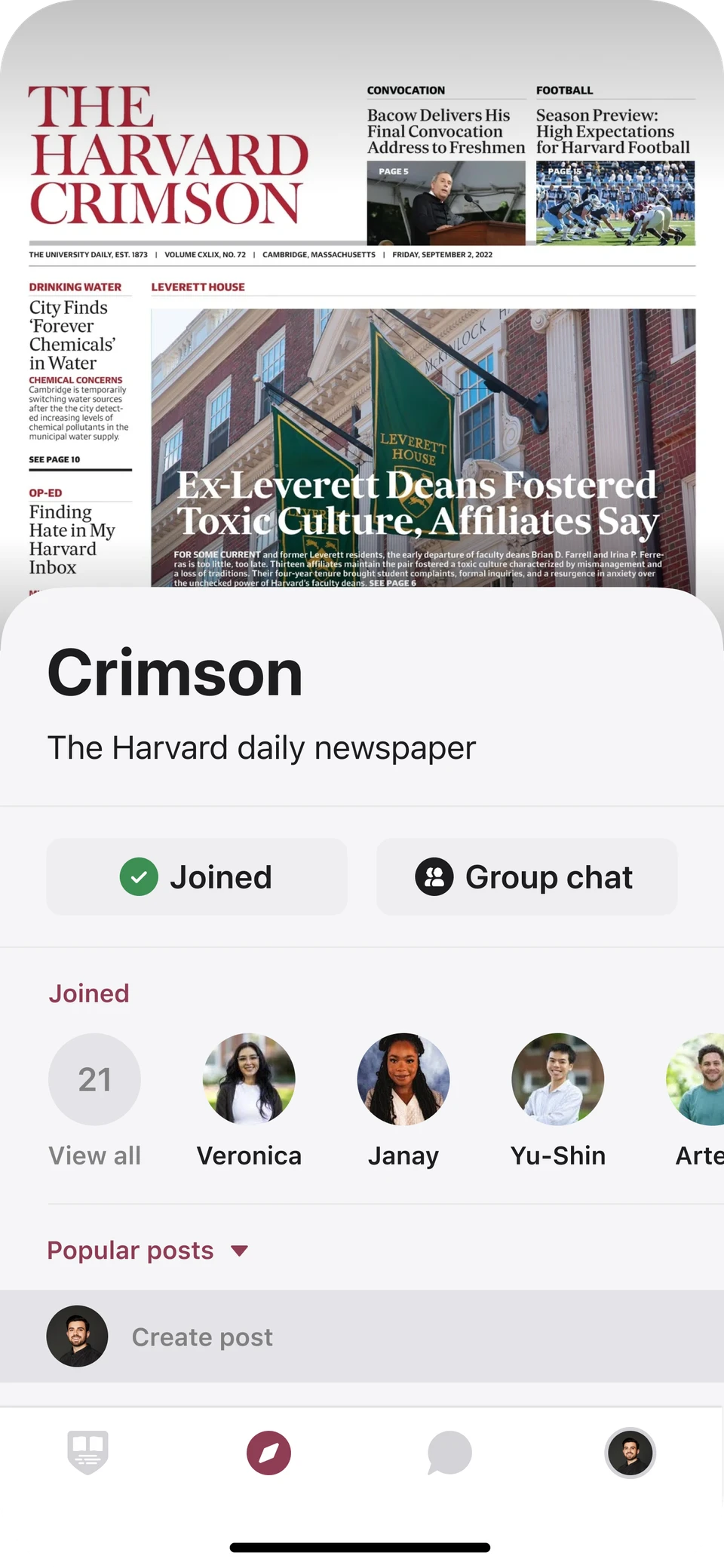
Events, clubs, and classes were built on one shared structure: a time, a place, members, and a chat. Each type added one feature on top.
| Object | Occurs | Members | Adds |
|---|---|---|---|
| Event | Once | Attendees | Invite flow (public or private) |
| Club | Recurring | Members | Forum for posts |
| Class | Recurring, on a schedule | Roster | Calendar placement |
Full profiles on day one
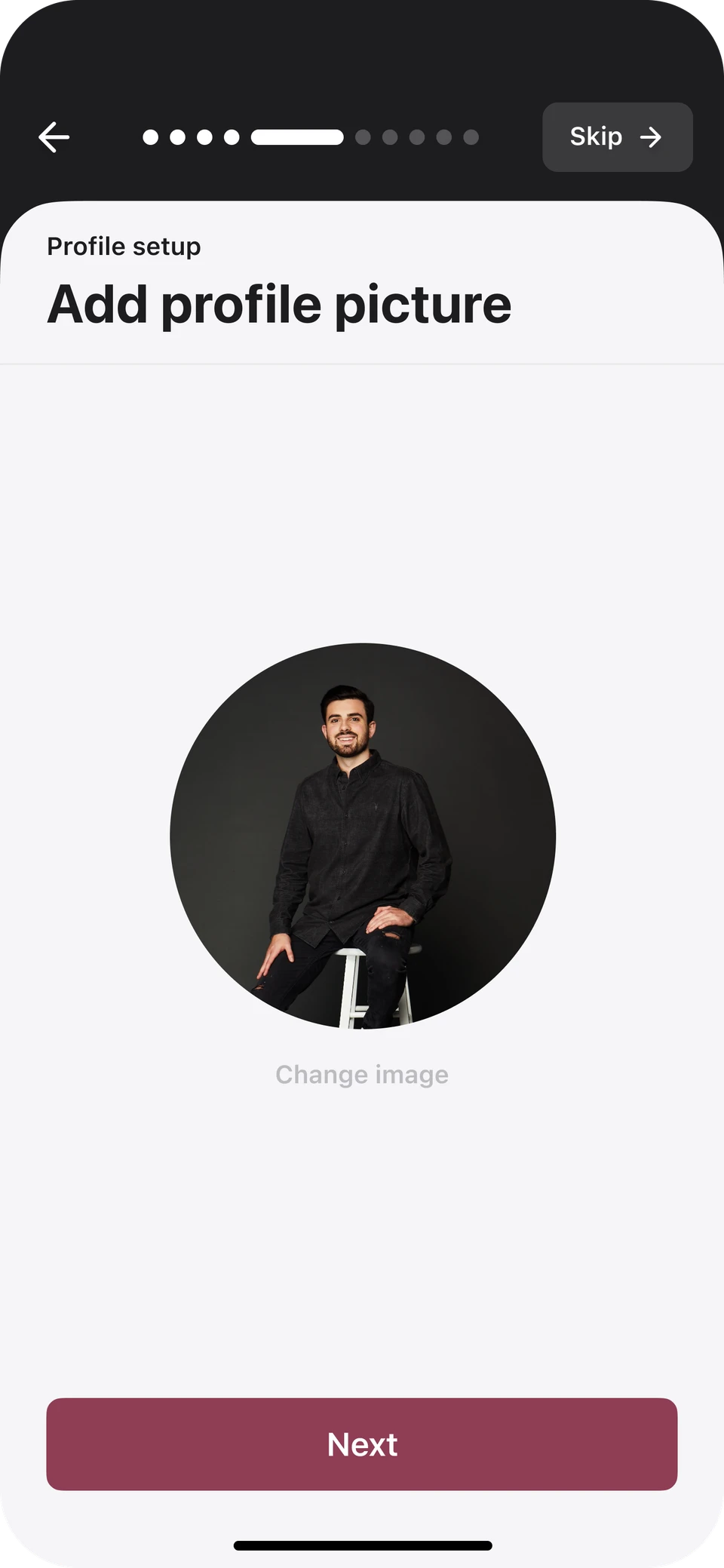
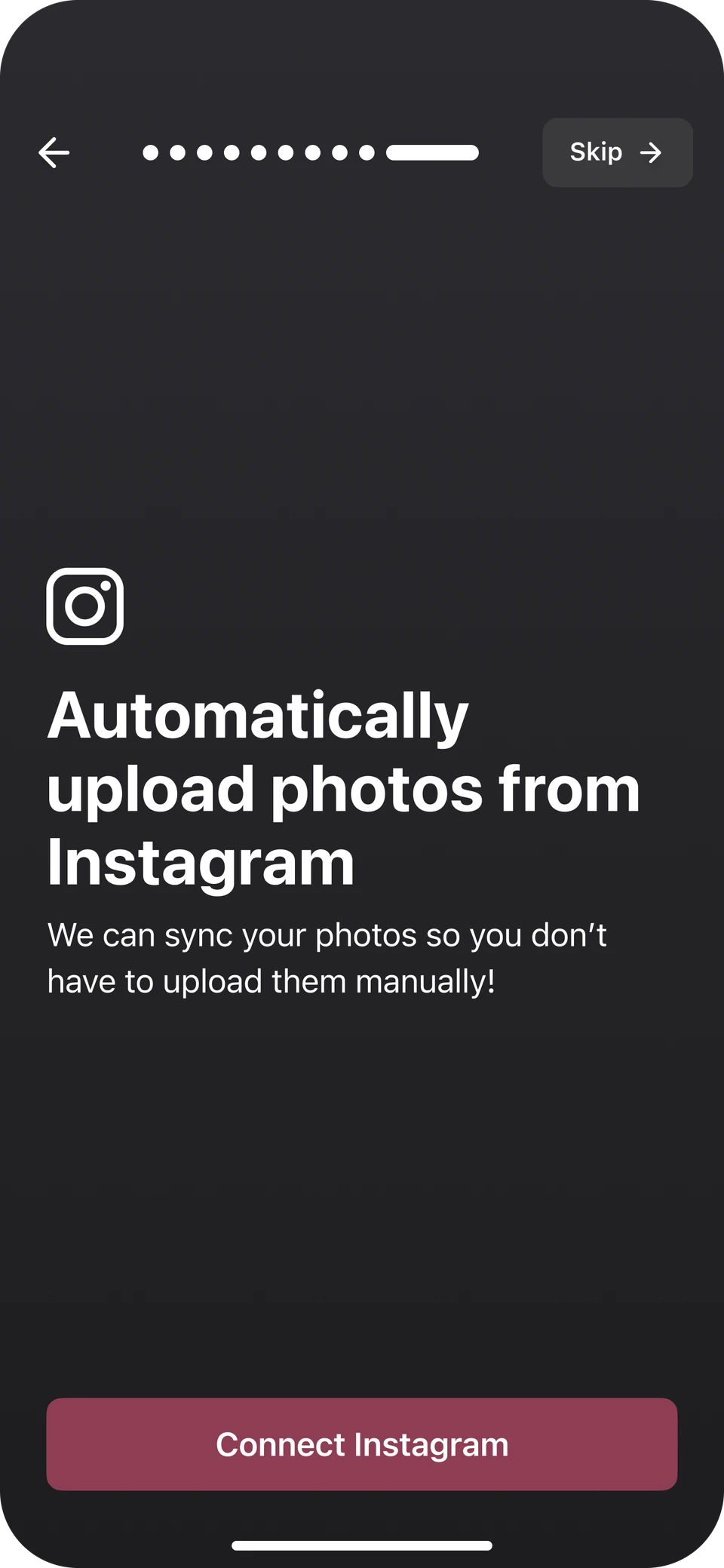
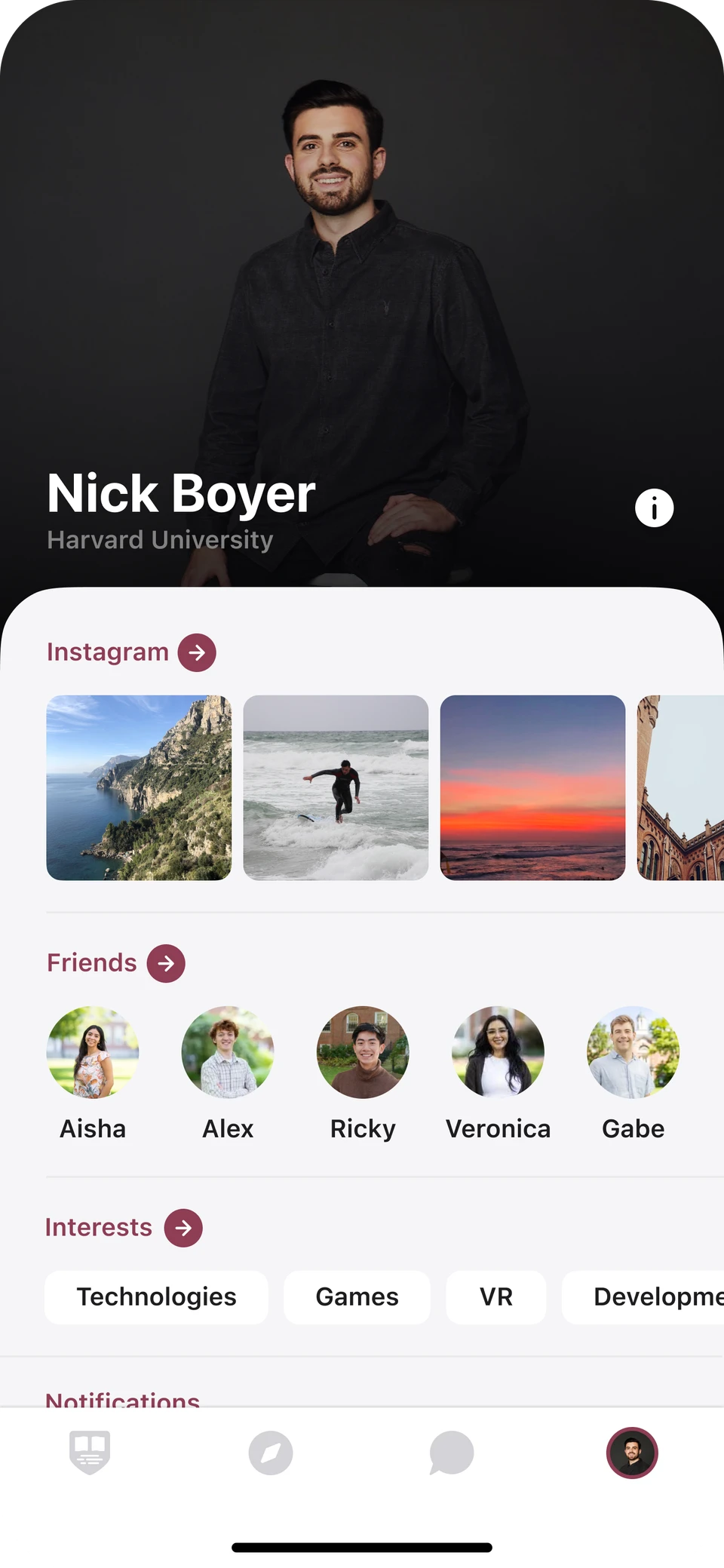
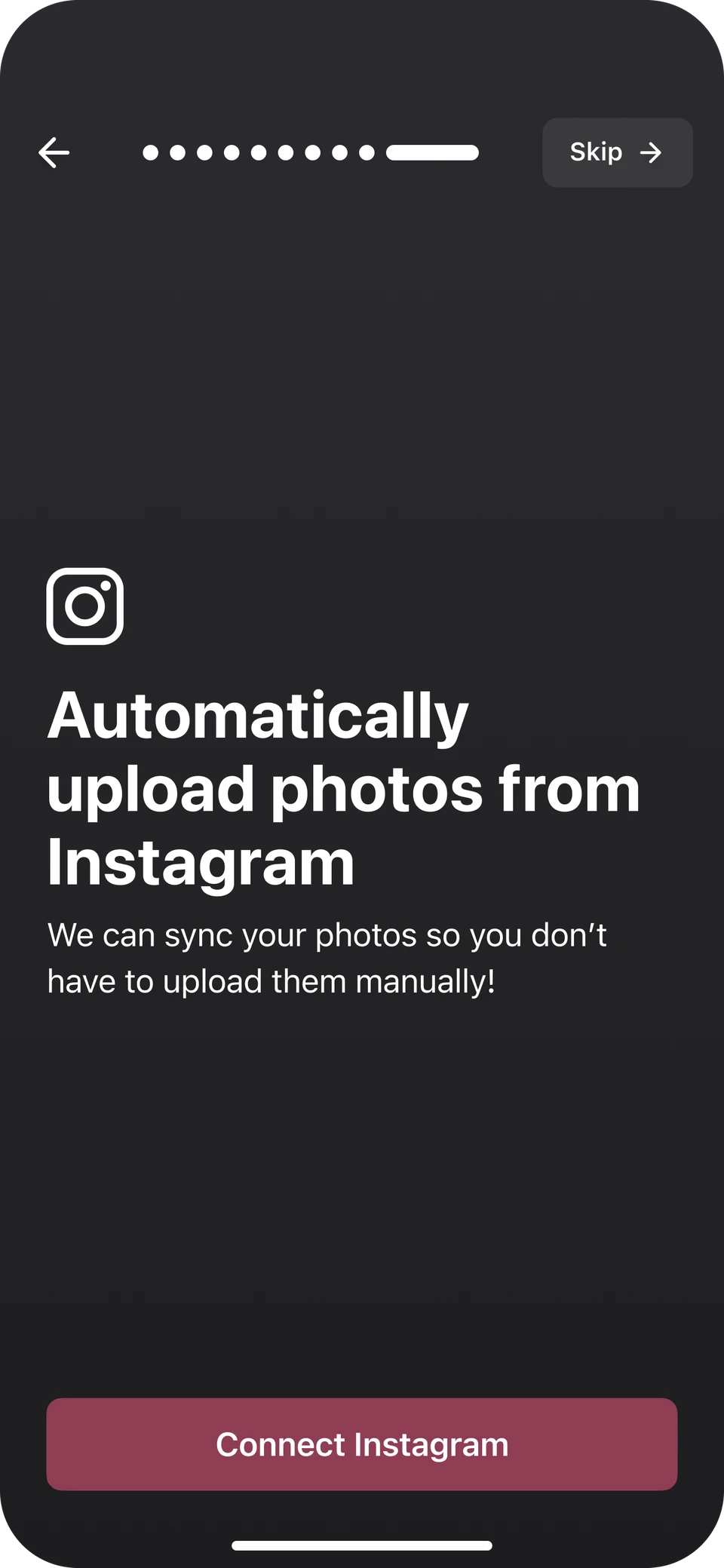
Each profile showed a student's school, class year, photo, friends, interests, and classes. Privacy settings let students choose what other students could see. An Instagram integration imported their photos, so they did not have to post again.
Why: An empty profile gives people no reason to connect. Importing Instagram made profiles full from the first session.
Tradeoff: It made a core part of onboarding dependent on a third-party API we did not control.
Launch one campus at a time
We launched campus by campus, with paid student brand reps at each school.
Why: Network effects are local. One campus with 30% of students on Rush is worth more than ten campuses with 3% each.
Tradeoff: Each new campus cost the same as the last: a new catalog scrape and new reps. Growth did not compound across schools.
Results
In year one, more than half of monthly users opened Rush every day.
| Metric | Year one | What it shows |
|---|---|---|
| Campuses | 14 | Campus-by-campus launch |
| DAU / MAU | 34K / 65K = 52% | A daily habit |
| Weekly messaging | 88% of users | Chat was the core loop |
| Joined ≥ 1 event and ≥ 1 group | 32K (about 49% of MAU) | Structure turned into participation |
| Friend requests | 4.9K per week | New connections kept forming after onboarding |
| Total users | 165K | Cumulative reach |
Why it didn't scale
Engagement was not the problem. Three structural limits were.
- Cohort turnover. About a quarter of every campus graduates each year. Rush had to win a new freshman class every fall just to stay the same size.
- Linear launch cost. Every campus needed a new catalog scrape and new paid reps. Launching campus 12 cost as much as launching campus 2.
- No path off campus. The trust and density that made Rush work came from the .edu boundary. Investors saw the engagement but not a route to a larger market or to revenue.
In early 2020, the pandemic closed campuses.
Without a physical campus, the product had nothing to organize.
What I would do differently
- Make schedule import self-serve. Students would import their own schedule from a calendar export or a photo of their registration page. A new campus would no longer need a custom catalog scrape, which was our largest launch cost.
- Track retention by class year from day one. DAU/MAU looked strong while each graduating class quietly left. I would have measured freshman-to-sophomore retention and senior churn as the core health metrics.
- Build a path for graduates. An alumni or city mode would keep seniors after graduation and follow them to the cities they moved to. Turnover would become expansion, which is the off-campus path investors asked for.
- Test revenue early. Clubs and events were already in the product, so ticketing and paid tools for student organizations (dues, member management) were natural first tests of willingness to pay.
What I took forward
These are the lessons I carried into Standard Spaces.
- Build the graph from real-world structure.
Shared events and spaces creates better first connections.
- Turn intent into conversation right away.
Auto-created event chats were the strongest loop in Rush.
- Check that growth compounds before you scale.
High engagement with linear distribution is a local maximum.
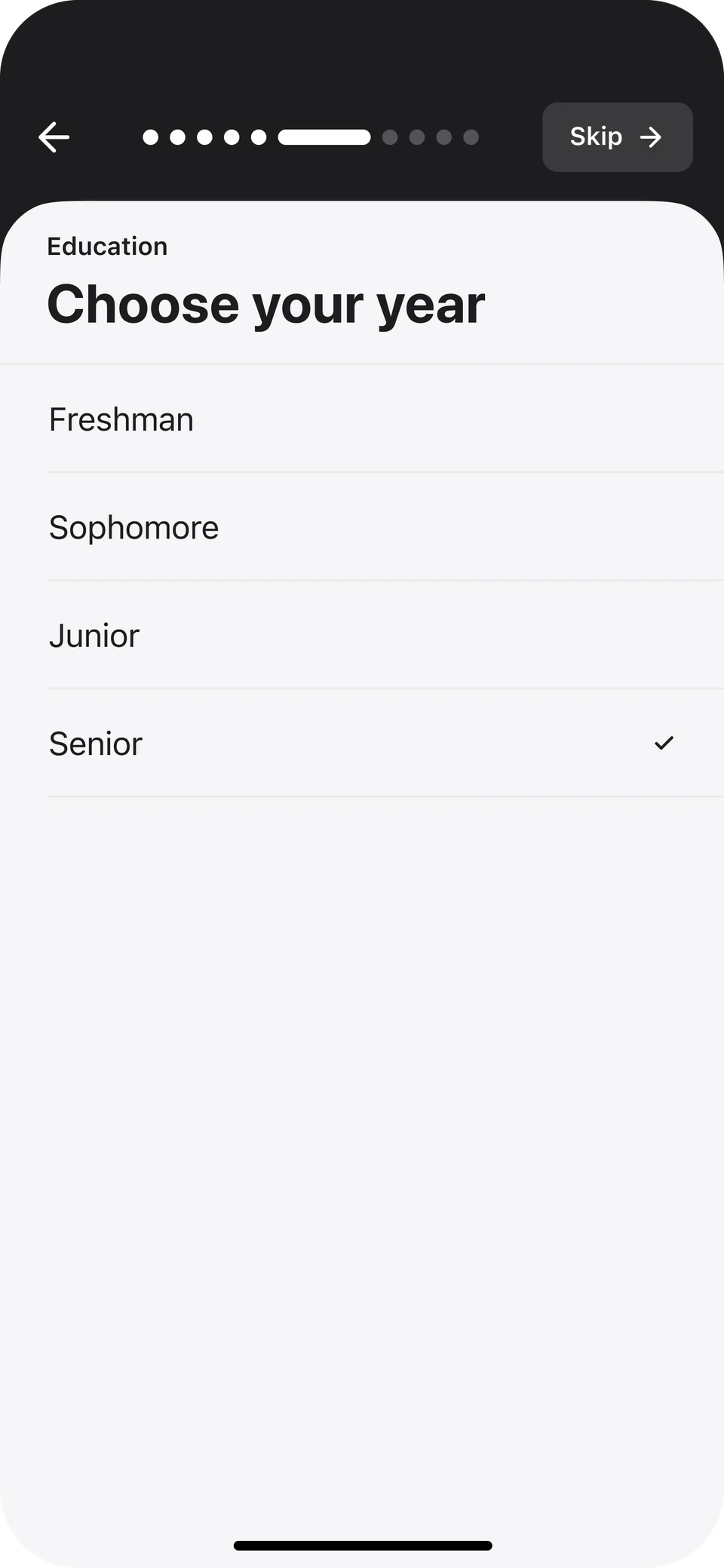
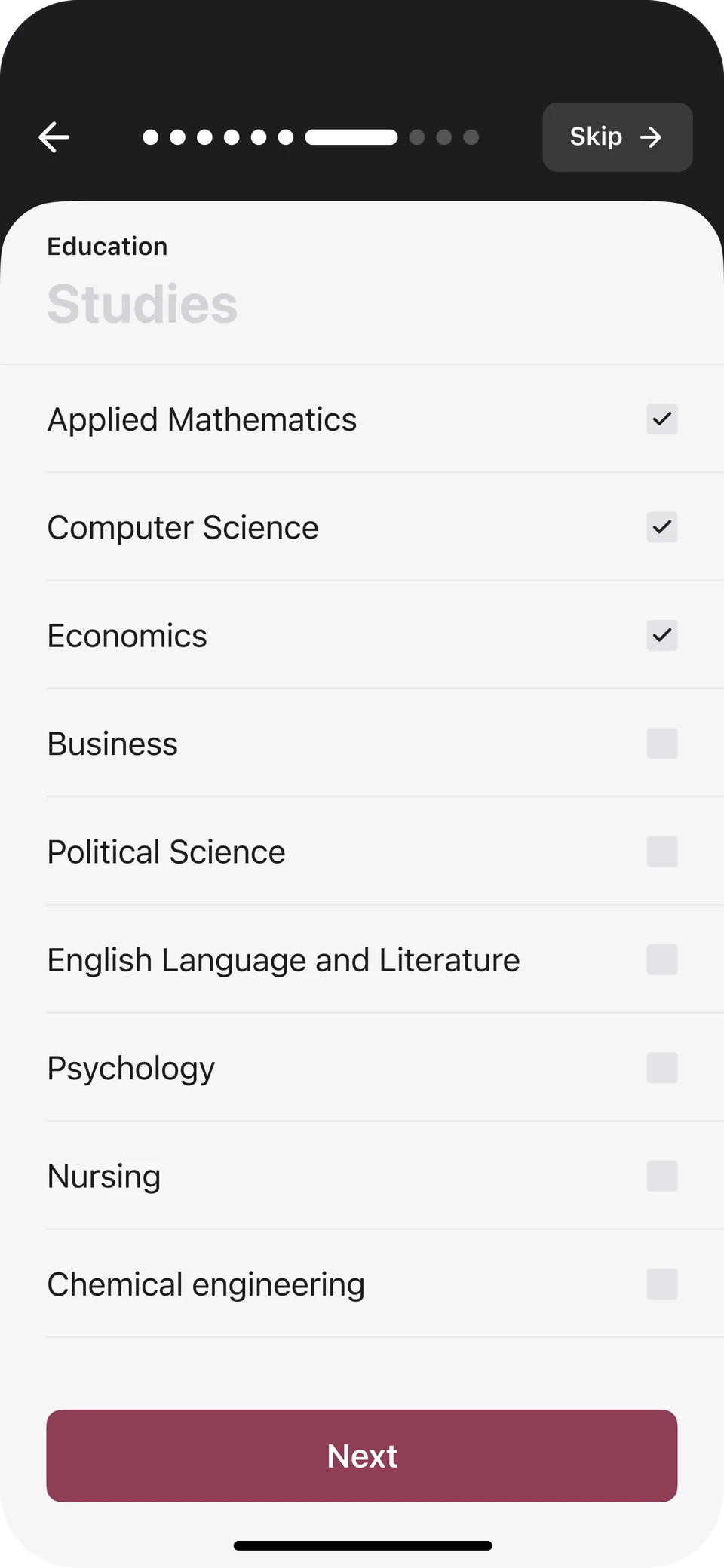
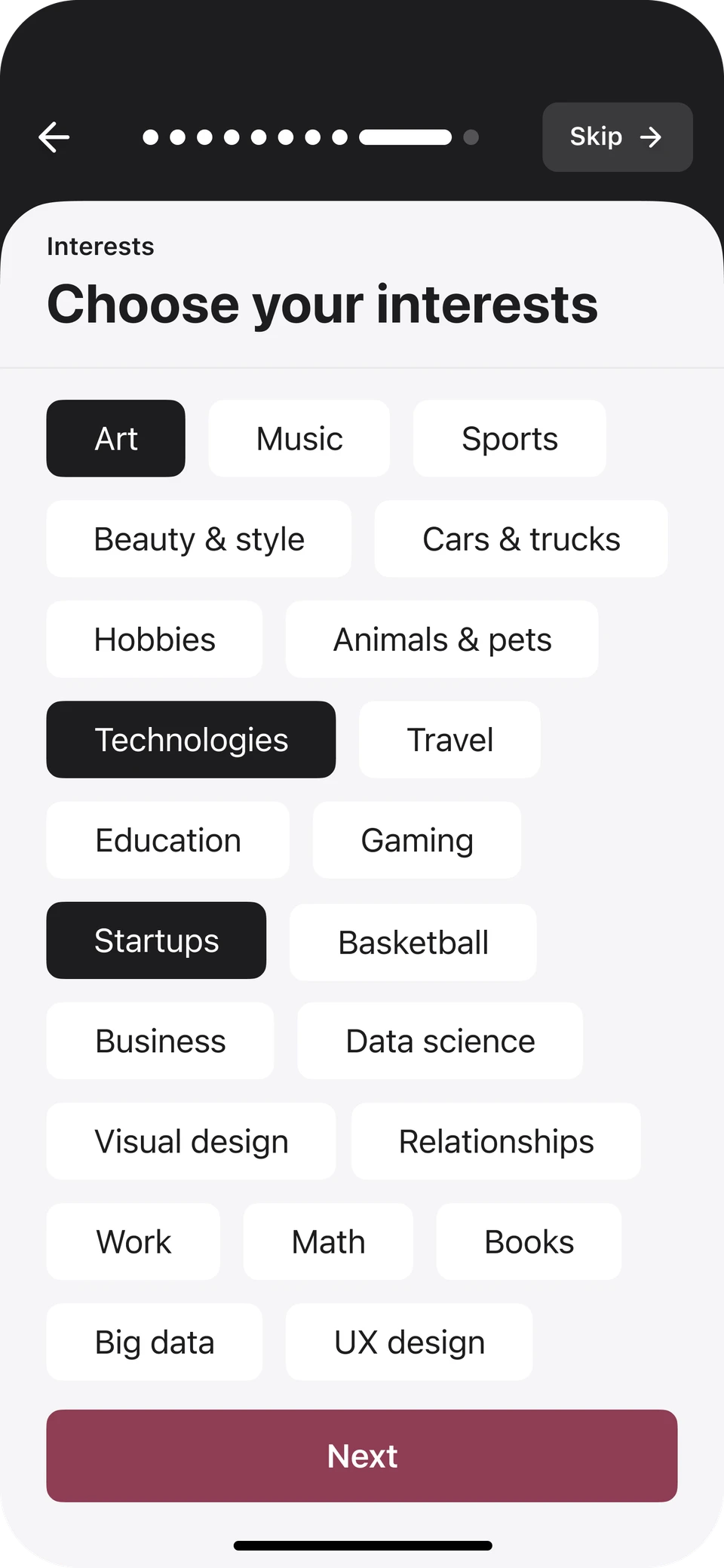
Appendix: Onboarding
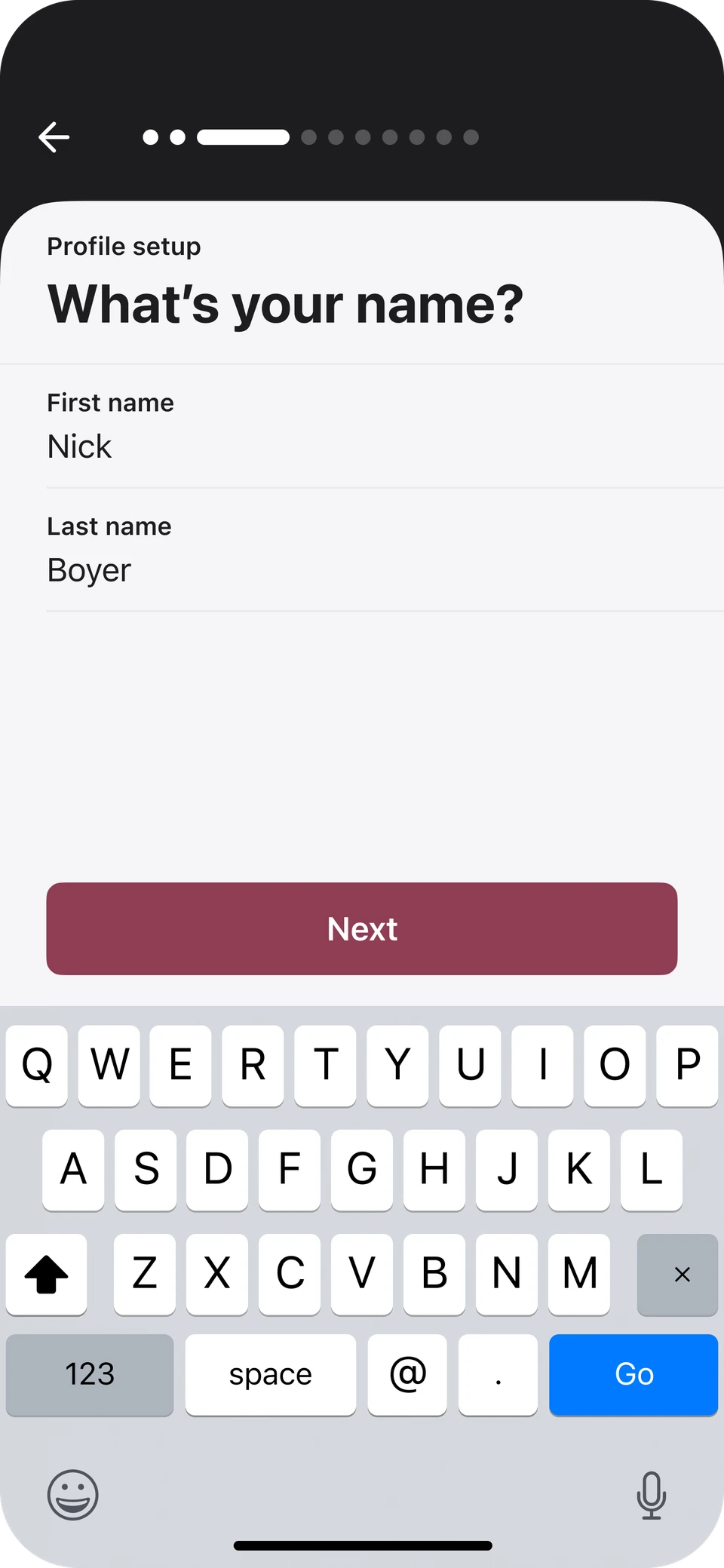
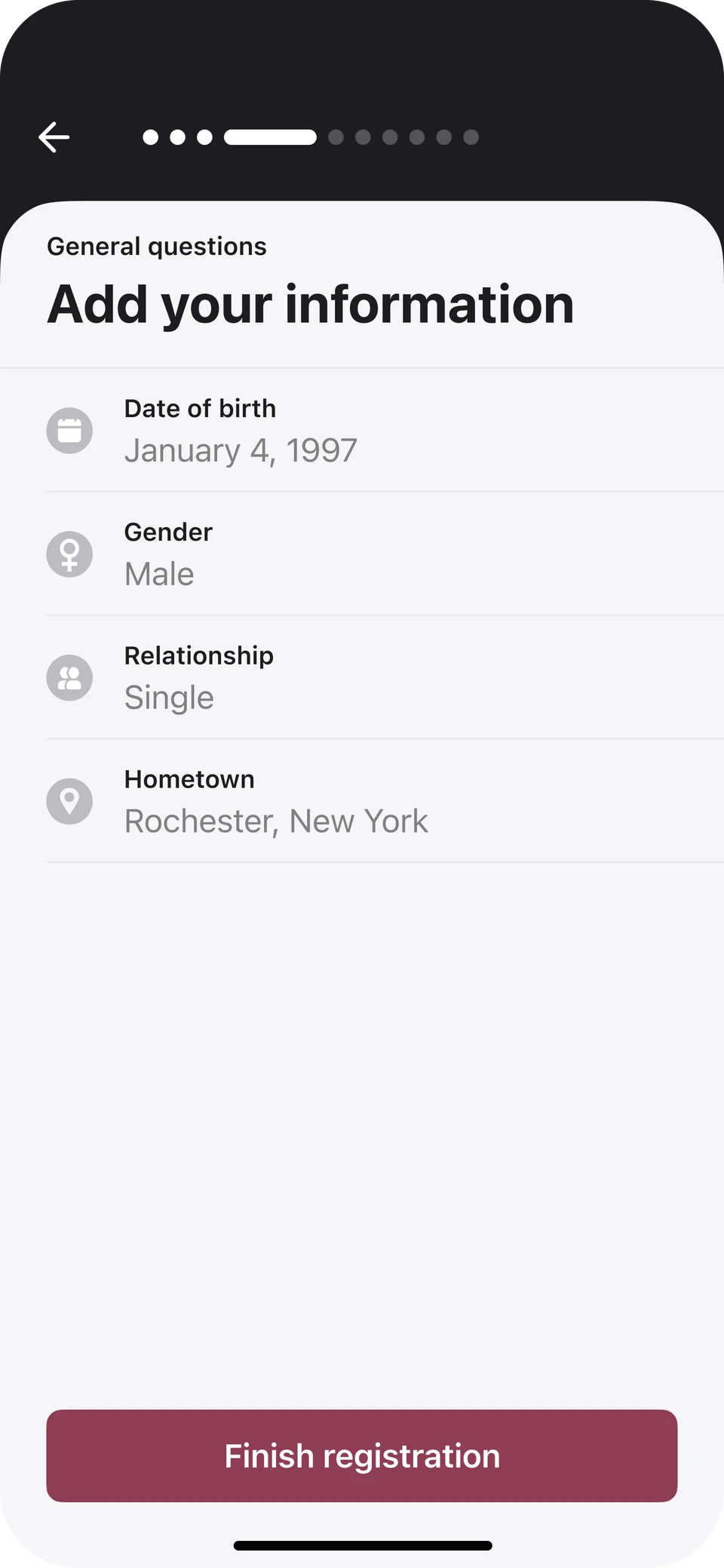
Every step fed the product: the campus and .edu email set the trust boundary, and year, studies, classes, and interests were the inputs for recommending classmates, clubs, and events. A student who finished onboarding opened Rush to a full first screen, not an empty feed, so the first session already felt like their campus.